.png)
Vinegar Cleaning Myths in Singapore: Can Vinegar Really Clean Every Surface at Home?

Vinegar is one of the most common household cleaning ingredients. Many homeowners in Singapore use it because it is affordable, easy to buy, and often seen as a “natural” cleaning solution.
You may have heard that vinegar can clean almost everything at home, from kitchen stains to bathroom marks and floor dirt. But is that really true?
The answer is: myth. Vinegar can be useful for some cleaning tasks, but it is not safe or suitable for every surface. In fact, using vinegar on the wrong surface can cause dullness, damage, stains, or long-term wear.

Why Vinegar Is Popular for Home Cleaning
Vinegar is mildly acidic, which means it can help break down some types of mineral stains, light water marks, and mild odours. This is why some people use it for simple household cleaning.
It is also commonly used because it does not feel as “strong” as chemical cleaners. For homeowners who prefer simple cleaning methods, vinegar may seem like a safer option.
However, natural does not always mean suitable for every surface. Vinegar is still acidic, and that acidity can damage certain materials.
Myth 1: Vinegar Can Clean Every Surface
This is one of the biggest vinegar cleaning myths.
Vinegar should not be used on every surface at home. Some materials can react badly to acid. Instead of making the surface cleaner, vinegar may cause it to become dull, rough, stained, or damaged.
Before using vinegar, it is important to check what material you are cleaning. A cleaner that works on one surface may not be safe for another.
Myth 2: Vinegar Is Safe for All Types of Flooring
Many people use vinegar to mop the floor, but this is not always a good idea.
Vinegar may be too acidic for certain floor types, especially natural stone, marble, parquet, hardwood, or some vinyl surfaces. Over time, it can affect the finishing, cause dull patches, or weaken protective coatings.
For Singapore homes with parquet flooring, marble flooring, or premium tiles, it is better to use a cleaner that is suitable for that specific surface.
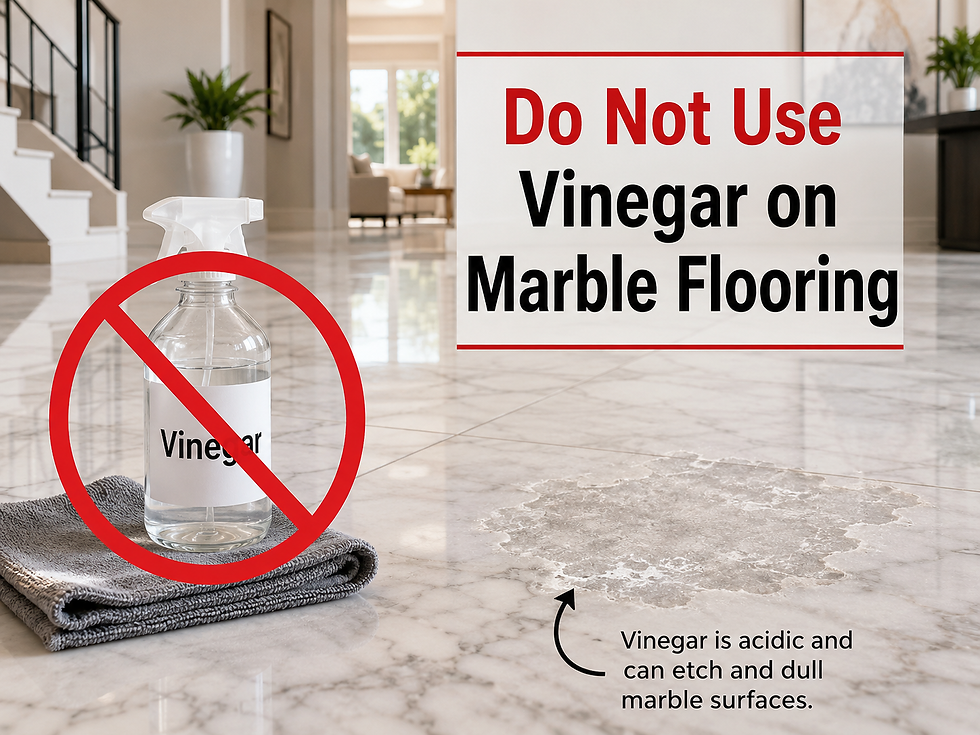
Myth 3: Vinegar Is Good for Marble and Natural Stone
This is a dangerous myth. Vinegar should not be used on marble, granite, limestone, terrazzo, or natural stone surfaces.
Because vinegar is acidic, it can react with stone and cause etching. Etching may look like dull marks, cloudy patches, or rough spots on the surface. Once this happens, normal cleaning may not be able to fix it.
If your home has marble countertops, stone flooring, or natural stone bathroom surfaces, avoid vinegar and use a stone-safe cleaner instead.
Myth 4: Vinegar Can Replace All Bathroom Cleaners
Vinegar may help with some light water marks, but it cannot replace all bathroom cleaners.
Bathrooms in Singapore can build up soap scum, body oil, mould, bacteria, and mineral stains due to humidity and daily use. Vinegar may not be strong enough for heavy grime, mouldy grout, or stubborn toilet stains.
Also, vinegar should not be mixed with certain cleaning chemicals, especially bleach. Mixing vinegar with bleach can create harmful fumes.
For bathroom cleaning, it is safer to use the right cleaning products for tiles, glass, toilet bowls, and grout.

Myth 5: Vinegar Is the Best Degreaser for Kitchen Cleaning
Vinegar can help with some light stains, but it is not the best solution for kitchen grease.
Kitchen grease is usually oily and sticky. Since vinegar is water-based and acidic, it may not break down heavy grease effectively. For oily stove areas, cooker hoods, backsplash, and kitchen cabinets, a proper degreaser is usually more effective.
In Singapore homes where cooking is frequent, especially frying or stir-frying, kitchen grease can build up quickly. Using vinegar alone may only spread the grease instead of removing it properly.
Myth 6: Vinegar Can Remove All Odours
Vinegar can help neutralise some mild smells, but it does not remove all odours.
If the odour comes from mould, damp fabric, pet urine, food spills, clogged drains, or dirty upholstery, vinegar may only cover or reduce the smell temporarily. The source of the odour still needs to be cleaned properly.
For example, if your sofa, mattress, carpet, or curtain smells musty, the problem may be trapped moisture, sweat, dust, or bacteria inside the fabric. Spraying vinegar on the surface may not solve the deeper issue.
Myth 7: More Vinegar Means Better Cleaning
Using more vinegar does not always mean better cleaning. In fact, too much vinegar can increase the risk of surface damage.
Some homeowners apply vinegar directly without diluting it, thinking it will clean faster. But strong vinegar may affect delicate surfaces, especially if left for too long.
When using vinegar, always test on a small hidden area first and avoid using it on sensitive materials.
Surfaces You Should Avoid Cleaning With Vinegar
Avoid using vinegar on:
Marble and natural stone
Granite and terrazzo
Parquet and hardwood floors
Waxed or polished surfaces
Some vinyl or laminate flooring
Electronic screens and devices
Painted walls
Metal surfaces that may corrode
Rubber seals and certain appliance parts
If you are unsure about the surface, it is safer not to use vinegar.
Where Vinegar May Be Useful
Vinegar can still be useful for some simple cleaning tasks, such as light water stains on certain glass surfaces, mild odour control, or simple cleaning of some non-sensitive surfaces.
However, it should be used carefully, diluted properly, and never mixed with bleach or strong chemicals.
The key is not to treat vinegar as an all-purpose cleaner for everything.

Why Singapore Homes Need the Right Cleaning Method
Singapore’s humid weather can make cleaning more challenging. Moisture can cause musty smells, mould growth, bathroom stains, and fabric odours. Dust can also build up quickly in homes near roads, corridors, or renovation works.
Because different areas of the home have different cleaning needs, using one solution for everything may not be effective. Kitchen grease, bathroom stains, dusty shelves, fabric odours, and delicate surfaces all require different cleaning methods.
This is where regular cleaning habits become important.

How a Part-Time Helper Service Can Help
A part-time helper service can help maintain your home using proper cleaning methods for different areas. Instead of relying on one DIY solution like vinegar, a trained cleaner can handle daily household cleaning more appropriately.
For example, a part-time helper can help with floor cleaning, kitchen wiping, bathroom washing, dusting, mopping, and general housekeeping. This is especially useful for busy families, working adults, elderly households, and homeowners who do not have time to clean deeply every week.
While vinegar may be useful for small tasks, regular home cleaning still needs the right tools, suitable products, and proper technique.
Final Thoughts
The idea that vinegar can clean every surface at home is a myth. Vinegar can be helpful in some situations, but it is not suitable for every material or every type of stain.
For Singapore homes, it is important to clean according to the surface and the problem. Natural cleaning methods can be useful, but they should still be used safely and correctly.
If you are unsure whether vinegar is safe for a surface, test first or avoid using it completely. The wrong cleaning method may cause damage that is more expensive to fix than the original stain.
Need help keeping your home clean without worrying about using the wrong cleaning method? Contact our team today to arrange a part-time helper service in Singapore. Our team can assist with regular home cleaning, including mopping, dusting, kitchen cleaning, bathroom cleaning, and general housekeeping, so your home stays fresh, tidy, and comfortable. Please contact our admin through our booking link that connects to your WhatsApp, or by simply calling our hotline at +65 8944 3986 for the best solution.
Explore our full range of housekeeping services by visiting our service page here.


Comments