.png)
Why You Shouldn’t Wipe Painted Walls Too Often in Singapore Homes

When we see stains, dust, fingerprints, or marks on painted walls, the first reaction is usually to wipe them away. It seems simple enough: take a damp cloth, add a bit of cleaning solution, and clean the wall.
However, painted walls are not always safe to wipe, especially if the paint is old, low-quality, matte, or affected by humidity. In Singapore homes, wall paint can be more sensitive due to moisture, daily dust, cooking fumes, air-conditioning, and general wear and tear.
So, why do many cleaning companies avoid wiping painted walls aggressively? The reason is simple: wiping can sometimes make the wall look worse instead of cleaner.

Painted Walls Are More Delicate Than They Look
Unlike tiles, glass, metal, or laminated surfaces, painted walls are not always designed for heavy wiping. Paint sits on the surface of the wall, and different paint finishes react differently to moisture and friction.
Some paints are more washable, while others can absorb water easily. If the wall paint is not washable, wiping it with a wet cloth may remove the paint layer, create uneven patches, or leave visible streaks.
This is why painted walls need to be handled carefully.
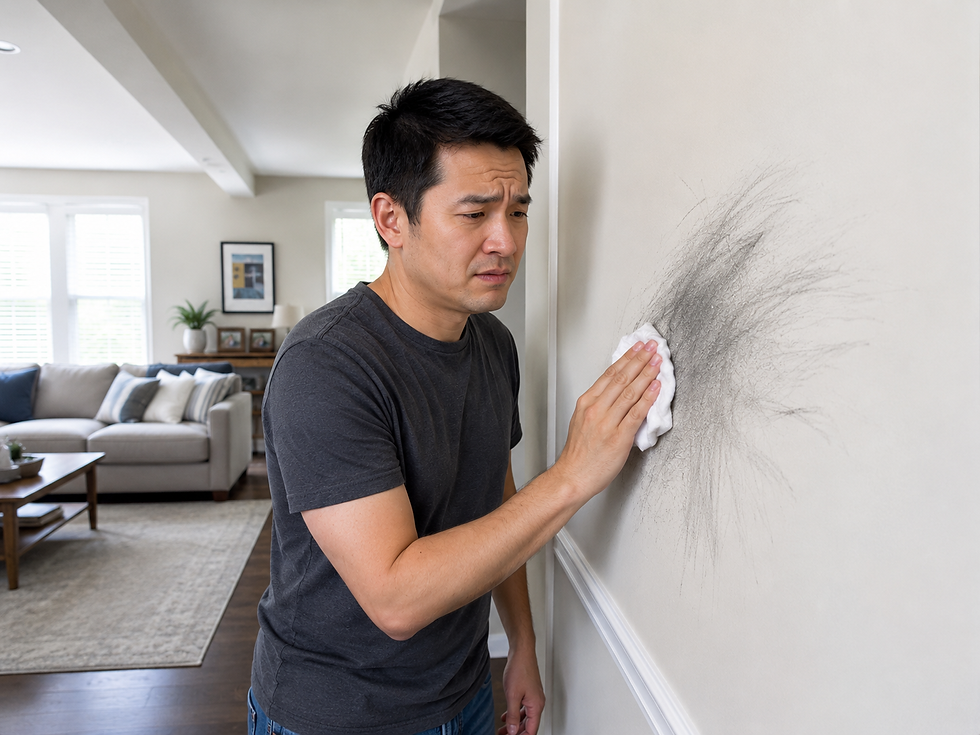
1. Wiping Painted Wall Can Remove the Paint Colour
One common issue is colour transfer. When you wipe a painted wall, especially with a damp cloth, some paint colour may come off onto the cloth.
This usually happens when the paint is old, thin, low-quality, or not fully washable. It can also happen if the wall was painted with matte or flat paint, which is more delicate than glossy finishes.
Once the colour comes off, the wall may look faded, uneven, or patchy. Unfortunately, normal cleaning cannot restore the original colour. The affected area may need touch-up painting instead.
2. Water Marks and Streaks May Appear
Many homeowners expect a damp cloth to remove stains neatly. But on painted walls, water can sometimes leave marks behind.
If the wall absorbs moisture unevenly, the cleaned area may become lighter, darker, or more obvious than before. This can create a “clean patch” effect where one part of the wall looks different from the rest.
In Singapore’s humid weather, painted walls may also take longer to dry properly, which can make water marks or streaks more noticeable.
3. Scrubbing Can Damage the Paint Surface
For stubborn stains, it is tempting to scrub harder. However, scrubbing painted walls can damage the paint surface.
Too much pressure can remove the top layer of paint, create dull patches, or expose the wall underneath. Rough sponges, brushes, magic sponges, or strong cleaning chemicals can also make the damage worse.
Even if the stain is removed, the wall may be left with a visible mark that cannot be cleaned away.
4. Strong Cleaning Chemicals Can React With Paint
Some stains may look easy to remove with a strong cleaning solution, but painted walls can react badly to chemicals.
Bleach, degreasers, alcohol-based cleaners, and strong alkaline cleaners may cause discolouration, peeling, fading, or paint softening. This is especially risky for feature walls, coloured walls, textured walls, and older painted surfaces.
For painted walls, stronger does not always mean better. A harsh cleaner may remove the stain but damage the paint at the same time.
5. Old Paint May Peel or Flake
If the paint is already old, cracked, bubbling, or peeling, wiping can make the problem worse. Moisture may enter weak areas and loosen the paint further.
This is common in areas affected by humidity, water seepage, poor ventilation, or previous wall damage. In such cases, wiping is not the right solution. The wall may need repair, sealing, or repainting before cleaning can be effective.
6. Matte Paint Is Usually Harder to Clean
Many Singapore homes use matte or flat paint because it gives a smooth and modern look. However, matte paint is usually more difficult to clean compared to semi-gloss or washable paint.
Matte paint can absorb stains more easily and may show wiping marks clearly. Even gentle cleaning may leave shiny patches or uneven areas if done too much.
If your wall has matte paint, it is better to avoid unnecessary wiping unless the mark is small and fresh.

Can Painted Walls Be Cleaned at All?
Yes, but they must be cleaned carefully. For light dust, it is usually safer to use a dry microfiber cloth, feather duster, or vacuum with a soft brush attachment.
For small stains, you can test a slightly damp cloth on a hidden area first. If no colour comes off and no water mark appears, gently dab the stain instead of scrubbing it.
Avoid soaking the wall, using strong chemicals, or rubbing the same spot repeatedly.
Simple Do’s and Don’ts for Painted Wall Cleaning
Do | Don’t |
Use a dry microfiber cloth for dust | Scrub the wall aggressively |
Test a hidden area first | Use bleach or strong chemicals |
Dab gently on small stains | Over-wet the painted surface |
Use mild cleaning methods only | Use rough sponges or hard brushes |
Stop if paint transfers to the cloth | Continue wiping if the wall becomes patchy |
When Should You Avoid Wiping the Wall?
You should avoid wiping painted walls if the paint is peeling, bubbling, powdery, old, or already patchy. You should also be careful with dark-coloured walls, matte walls, textured walls, and feature walls.
If the stain has been there for a long time, it may already be absorbed into the paint. In this case, wiping may not remove it completely and may only spread the mark.
Sometimes, repainting may be a better option than cleaning.
How Professional Cleaning Can Help
A professional cleaning team can help assess which surfaces are safe to clean and which areas need extra care. For painted walls, professional cleaners usually avoid aggressive wiping because they understand the risk of paint damage.
During a home cleaning session, they can help clean safer surfaces such as floors, windows, kitchen areas, bathrooms, cabinets, glass, tiles, and other washable surfaces. For walls, they may recommend gentle dusting instead of wet wiping, depending on the paint condition.
This helps reduce the risk of accidental wall damage while still improving the overall cleanliness of your home.
Conclusion
Painted walls may look simple to clean but wiping them the wrong way can cause paint transfer, water marks, uneven patches, peeling, or discolouration. This is especially important in Singapore homes, where humidity, dust, and daily wear can affect wall conditions over time.
Before wiping painted walls, always check the paint condition and test a small hidden area first. If the wall paint is delicate, old, or matte, gentle dusting may be safer than wet wiping.
Need help cleaning your home without damaging delicate surfaces? Contact our team today for professional home cleaning service in Singapore. We can help clean the right areas safely and advise when certain surfaces, such as painted walls, should be handled with extra care.
Please contact our admin through our booking link that connects to your WhatsApp, or by simply calling our hotline at +65 8944 3986 for the best solution.
Explore our full range of housekeeping services by visiting our service page here.



Comments