.png)
How to Clean a Stainless Steel Kitchen Table Top in Singapore Homes Without Leaving Streaks

Stainless steel table tops are common in many Singapore kitchens because they look clean, modern, and professional. They are also durable, heat-resistant, and suitable for food preparation areas.
However, stainless steel is not completely maintenance-free. It can show fingerprints, oil stains, water marks, scratches, and dull patches if it is cleaned the wrong way. In Singapore homes, where cooking is frequent and kitchens can become oily from frying, steaming, and stir-frying, proper stainless steel cleaning is important.
The good news is that stainless steel is not difficult to maintain if you use the right method.

Why Stainless Steel Table Tops Need Proper Cleaning
Stainless steel may look strong, but the surface can still be scratched or stained. If you use rough scrubbers, strong chemicals, or the wrong wiping direction, the table top may become dull over time.
Kitchen grease, food spills, sauces, fingerprints, and water droplets can also leave marks if they are not cleaned regularly. This is especially common in humid Singapore homes, where moisture can make water stains and dullness more noticeable.
A good cleaning routine helps keep your stainless steel table top shiny, hygienic, and pleasant to use.
Step 1 on Stainless Steel TableTop Cleaning Singapore: Remove Loose Dirt and Food Crumbs First
Before wiping the table top, remove loose crumbs, food bits, dust, or small particles. You can use a dry microfiber cloth or a soft tissue to gently clear the surface.
Do not wipe aggressively when there are rough crumbs on the table, as they may drag across the stainless steel and create fine scratches.
Step 2: Use Mild Dish Soap and Warm Water
For daily cleaning, mild dish soap mixed with warm water is usually enough.
Dip a soft cloth into the soapy water, squeeze out excess water, and wipe the stainless steel surface gently. This helps remove food stains, light grease, and fingerprints without damaging the surface.
Avoid soaking the table top with too much water. Stainless steel can handle moisture, but leaving water sitting on the surface for too long may cause water marks.
Step 3: Wipe Along the Grain
Most stainless steel surfaces have a visible grain or brushing direction. You may notice fine lines running in one direction across the table top.
Always wipe along the grain, not against it. Wiping along the grain helps reduce streaks and keeps the finish looking smoother.
If you wipe in circles or against the grain, the surface may look cloudy or uneven after drying.
Step 4: Rinse With a Clean Damp Cloth
After using soapy water, wipe the table top again with a clean damp cloth. This removes soap residue that may otherwise leave streaks or a sticky feeling.
Make sure the cloth is not too wet. A lightly damp microfiber cloth is usually enough.
Step 5: Dry Immediately With a Microfiber Cloth
This is one of the most important steps.
After cleaning, dry the stainless steel table top immediately with a clean, dry microfiber cloth. This helps prevent water marks, streaks, and dull patches.
Do not let the surface air-dry, especially in a humid kitchen. Water droplets can leave visible marks if they dry naturally.

How to Remove Grease From Stainless Steel Table Tops
If your table top feels oily after cooking, mild dish soap may still work. Dish soap is designed to cut through grease, so it is usually safe for regular kitchen cleaning.
For heavier grease, you may need to wipe the area a few times using warm soapy water. Avoid using overly strong degreasers unless the product is suitable for stainless steel.
If you use a kitchen degreaser, always test it on a small hidden area first and follow the product instructions.
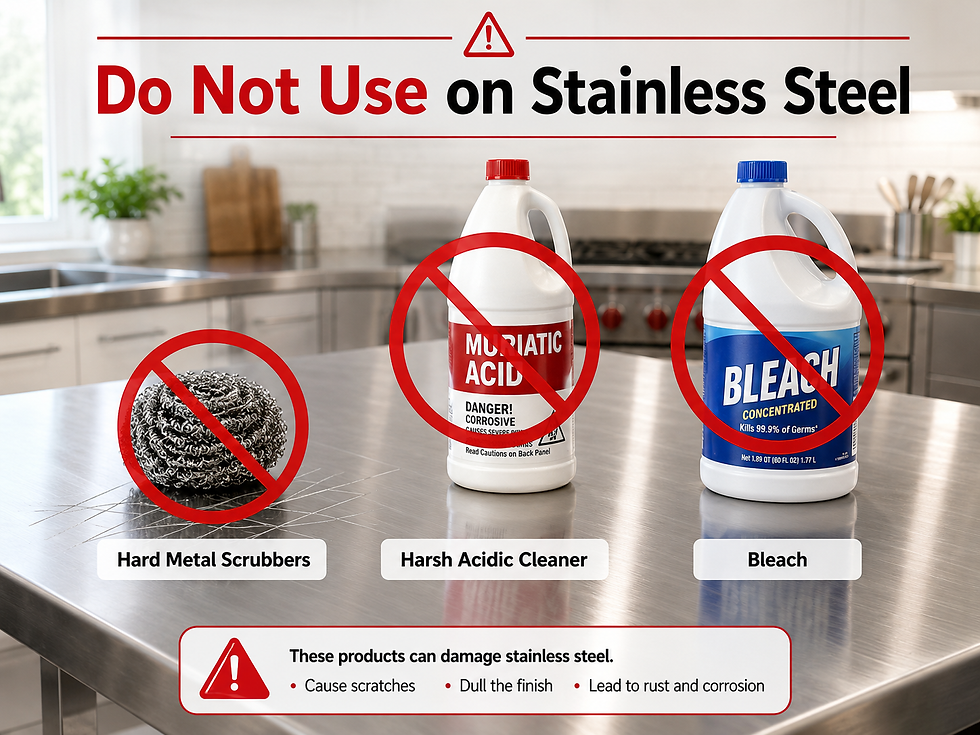
What Not to Use on Stainless Steel
Using the wrong cleaning tools can damage the surface. Avoid these when cleaning stainless steel table tops:
Steel wool
Hard metal scrubbers
Rough scouring pads
Bleach
Harsh acidic cleaners
Strong alkaline cleaners not suitable for stainless steel
Abrasive powders
Dirty cloths with sand or hard particles
These can cause scratches, dullness, discolouration, or chemical marks.
Can You Use Vinegar on Stainless Steel?
Some homeowners use diluted vinegar to remove water marks. While vinegar may help in some cases, it should be used carefully because it is acidic.
If you use vinegar, dilute it with water and do not leave it on the stainless steel surface for too long. Always rinse and dry the surface after cleaning.
For daily cleaning, mild dish soap and water are usually safer and more practical.
How Often Should You Clean a Stainless Steel Table Top?
For Singapore homes, stainless steel kitchen table tops should be wiped after every cooking session or food preparation. This prevents oil, sauce, and food residue from drying on the surface.
A simple routine can be:
Cleaning Task | Recommended Frequency |
Wipe food crumbs and spills | Immediately |
Light wipe with damp cloth | Daily |
Clean with mild soap and warm water | After cooking or food preparation |
Remove grease build-up | Weekly or as needed |
Deep kitchen cleaning | Every few weeks or monthly |
If your household cooks often, especially oily dishes, the kitchen may need more frequent cleaning.
Why Stainless Steel Still Looks Dirty After Wiping
Sometimes, stainless steel still looks streaky even after cleaning. This usually happens because of soap residue, dirty cloths, wiping against the grain, or not drying the surface properly.
To fix this, wipe the surface again with a clean damp cloth, then dry immediately with a fresh microfiber cloth.
A clean cloth makes a big difference. If the cloth is oily or dirty, it may spread grease instead of removing it.
Don’t Forget the Rest of the Kitchen
The stainless steel table top is only one part of the kitchen. Grease and dust can also settle on stove areas, backsplash, cabinets, sinks, switches, and floors.
In Singapore homes, cooking fumes can spread to nearby surfaces, especially in smaller kitchens. Even if the table top looks clean, surrounding areas may still feel sticky or oily.
This is why regular kitchen cleaning is important, not just wiping one surface.
How a Part-Time Helper Service Can Help
If you are busy with work, family, or daily responsibilities, keeping the kitchen consistently clean can be tiring. A part-time helper service can help maintain your kitchen on a regular basis.
A part-time helper can assist with wiping kitchen surfaces, mopping floors, cleaning sinks, washing bathrooms, dusting furniture, and general housekeeping. For homes that cook often, regular cleaning helps prevent grease from building up and becoming harder to remove later.
While you can clean a stainless steel table top yourself, having regular home cleaning support can make it easier to maintain the whole kitchen and living space.

Final Thoughts
Stainless steel kitchen table tops are durable and practical, but they still need proper care. To clean them safely, remove loose dirt first, use mild dish soap with warm water, wipe along the grain, rinse with a clean damp cloth, and dry immediately.
Avoid rough scrubbers and harsh chemicals, as they can scratch or dull the surface. With the right cleaning routine, your stainless steel table top can stay cleaner, shinier, and more hygienic for daily use.
Need help keeping your kitchen clean and grease-free? Contact our team today to arrange a part-time helper service in Singapore. Our team can assist with regular home cleaning, including kitchen wiping, floor mopping, bathroom cleaning, dusting, and general housekeeping, so your home stays fresh, clean, and comfortable.
Please contact our admin through our booking link that connects to your WhatsApp, or by simply calling our hotline at +65 8944 3986 for the best solution.
Explore our full range of housekeeping services by visiting our service page here.


Comments